25 Years of Vision: The Anon Story
25 Years of Vision: The Anon Story
When Anon first launched, it was more than just another goggle and helmet brand. It was a response to the simple but powerful question: how do you give skiers and riders the clearest, most reliable protection on the mountain, while pushing product design into new territory?
Born from Burton's legacy of progression and the rider feedback model, Anon quickly became a proving ground for novel magnetic technologies and impact mitigation systems that have redefined how we see and protect ourselves in skiing and snowboarding.
The Launch of Anon (2001–2010)
-
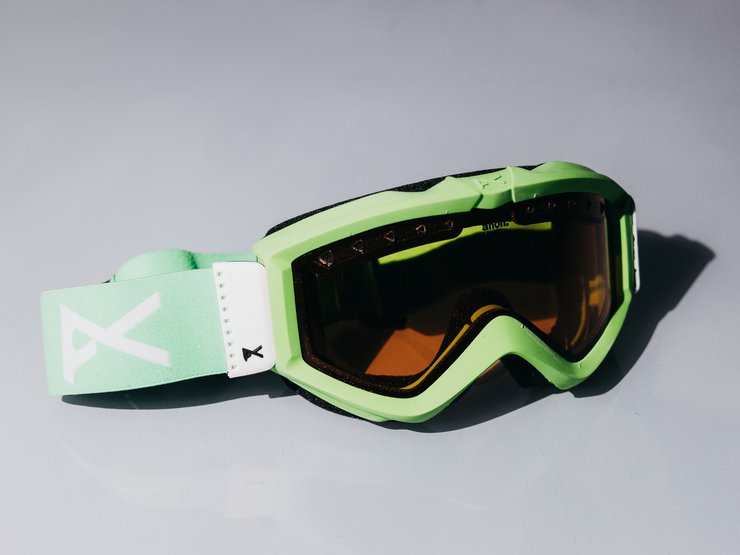
2005
-
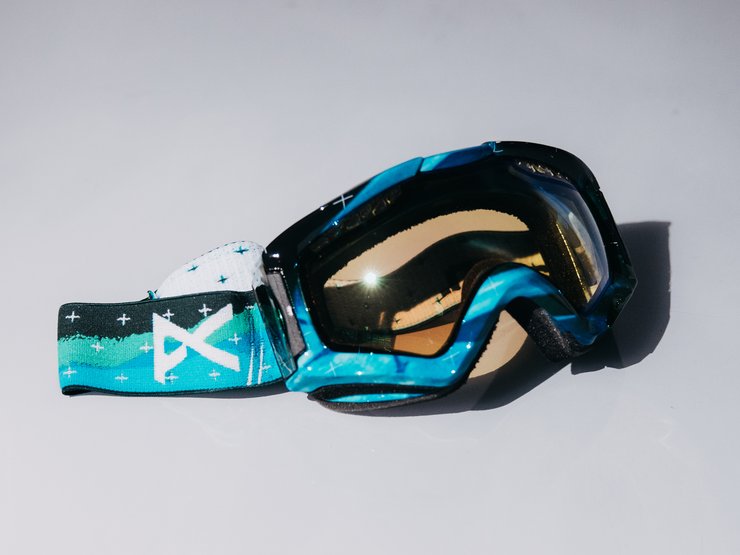
2009
-
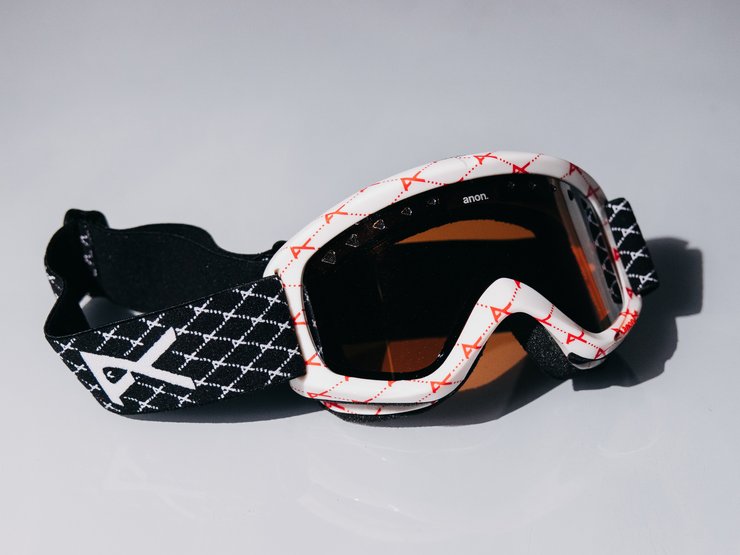
2009
-
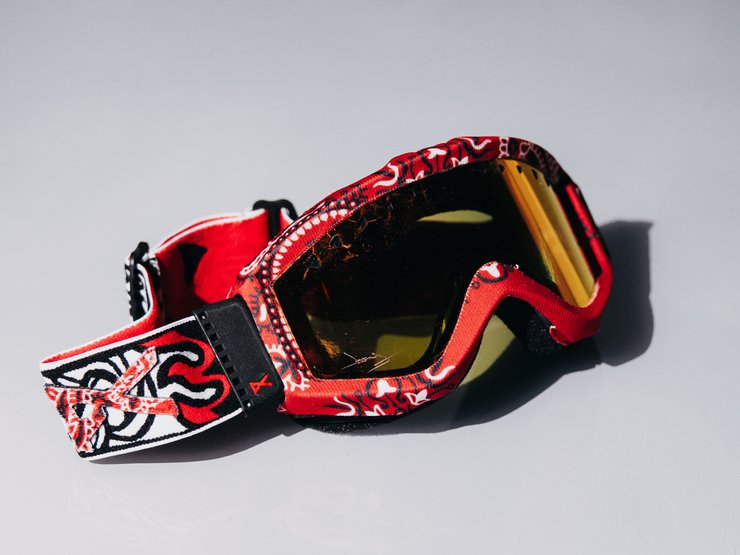
2009
-
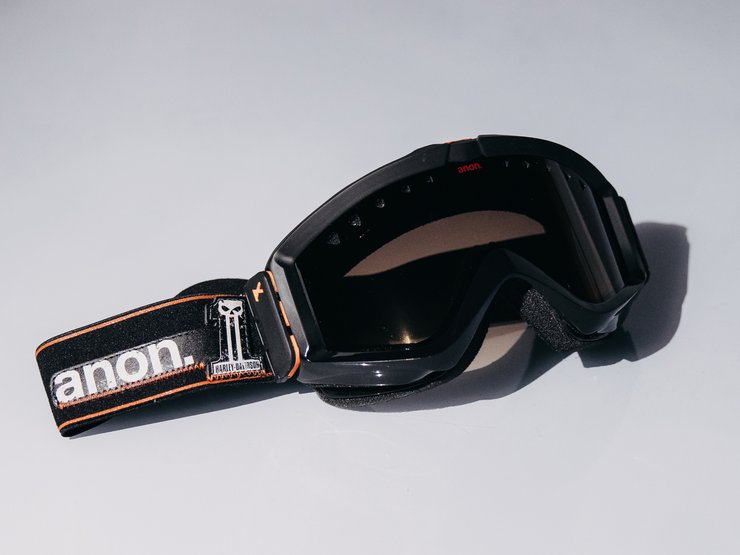
2010
Anon officially launched in 2001 with a goggle design process built on Burton's rider feedback model, willingly breaking convention to deliver exactly what athletes were asking for.
By 2004, Anon had five goggle models including Anagram, Figment, Cypher, Theorem, and Halcyon. Demand was huge due to unique features, like women's-specific frames, airflow-optimized channels, mirror fades, studded straps, and photochromic paint. In short, Anon was offering things riders and skiers couldn't get anywhere else.
In the winter of 2010, Anon introduced MIPS technology to the R.E.D. helmet line, bringing rotational impact protection to snow helmets, a first for the industry. This collaboration between R.E.D. and Anon marked a major milestone for ski and snowboard helmet development, but the two brands were still operating independently, the majority of the time. This laid the groundwork for the next chapter of Anon’s history.
Two Brands, One Vision (2011–2013)
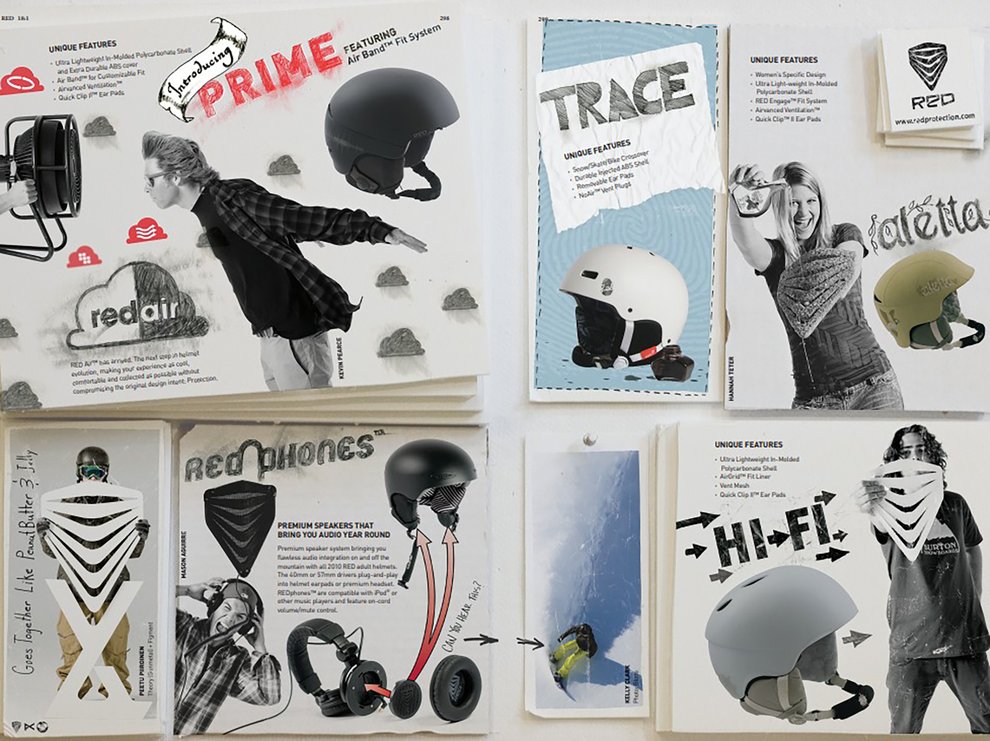
As Anon's first decade was wrapping up, there was still a disconnect between them and R.E.D.. Each had their own color palettes, meetings, and marketing stories. "We were developing complementary products, but telling two different stories," recalled longtime product manager, Trevor Moore. The overlap made a merger inevitable.
Ultimately, the effort to align graphics, fit, and storytelling became the foundation for the modern Anon brand. What started as a practical decision to streamline design turned into an opportunity to create a single, cohesive experience. By 2013, helmets and goggles were both offered exclusively under the Anon name. Having one design language and one purpose paved the way for the industry-disrupting tech solutions that would follow, including magnetic lens retention, seamless face mask integration, and next-level comfort.
Magna-Tech® & MFI®: Industry-first Goggle Innovations (2013–2018)
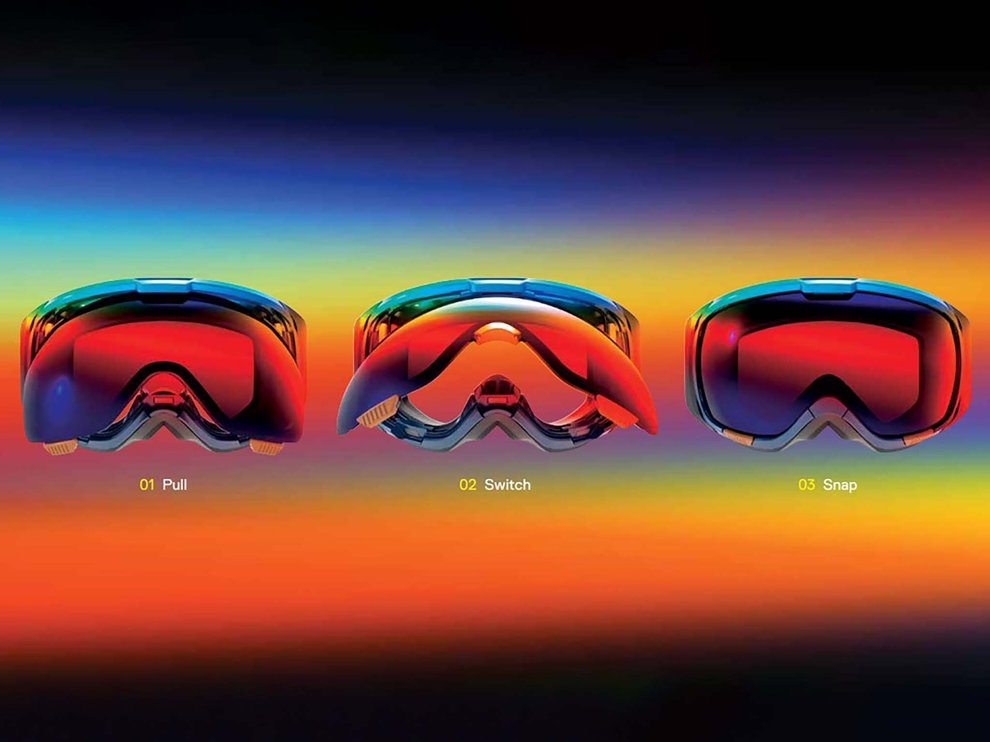
In 2013, Anon launched Magna-Tech®, the first magnetic lens-change system ever introduced to snow goggles by any manufacturer. Early skepticism quickly gave way to excitement once riders experienced how well Magna-Tech worked. This new approach to lens retention, which was two to three years in development, changed snowsports history forever. Magna-Tech debuted in the M1 Goggle, marking a revolution, with improvements following shortly after, in the M2.
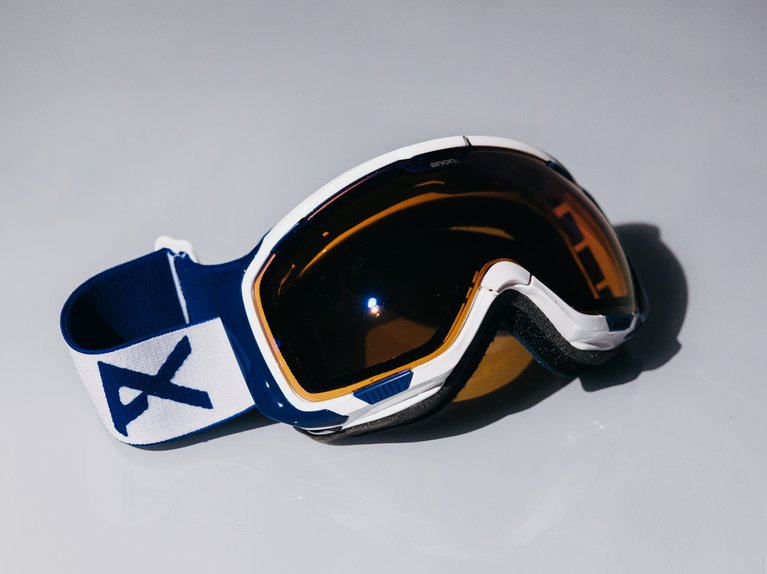
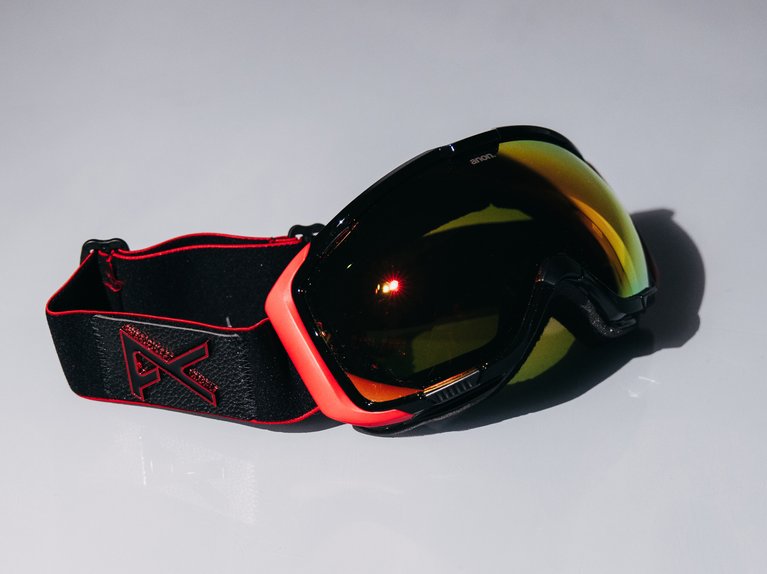
Anon's next flagship technology, MFI® (Magnetic Facemask Integration), launched shortly after Magna-Tech, in 2015. Like Magna-tech, MFI utilized rare-earth magnets too. This new groundbreaking innovation came from a conversation between Zeb White and Trevor Moore. Zeb, an assistant product manager with a motocross background, suggested a face mask that could seamlessly snap into goggles. Moore picked up a magnet from his desk and said, "What if we just use this?" And the rest is history.
Following its launch, MFI immediately proved itself in the field. Within a year, it became an Anon signature, helping solve fogging issues while revolutionizing face mask comfort, and ease of use. The seamless goggle connection that MFI delivered differentiates Anon protective equipment to this day.
2015 also saw the arrival of the WM1 goggle. Backed by Donna Carpenter and informed by Anon's women's team, it was developed through hands-on testing and feedback to achieve a better fit and aesthetic for female skiers and riders. The result wasn't just a smaller frame, it was the first women-specific Magna-Tech model.
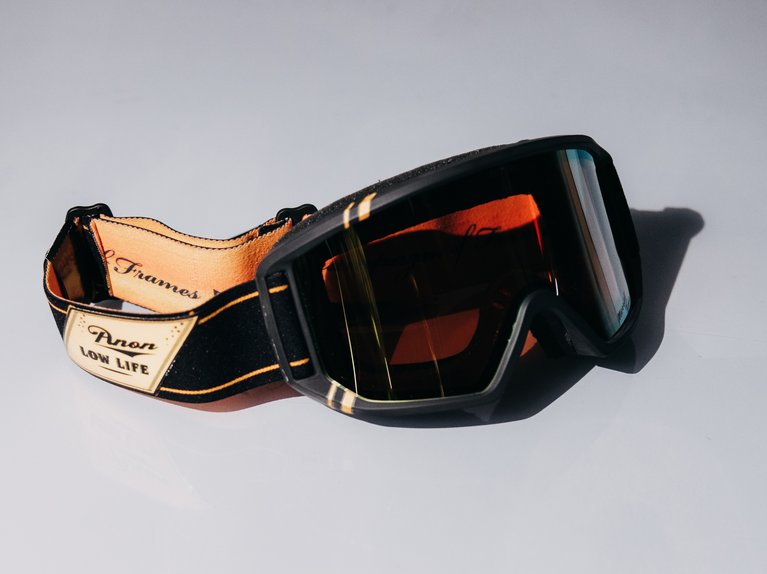
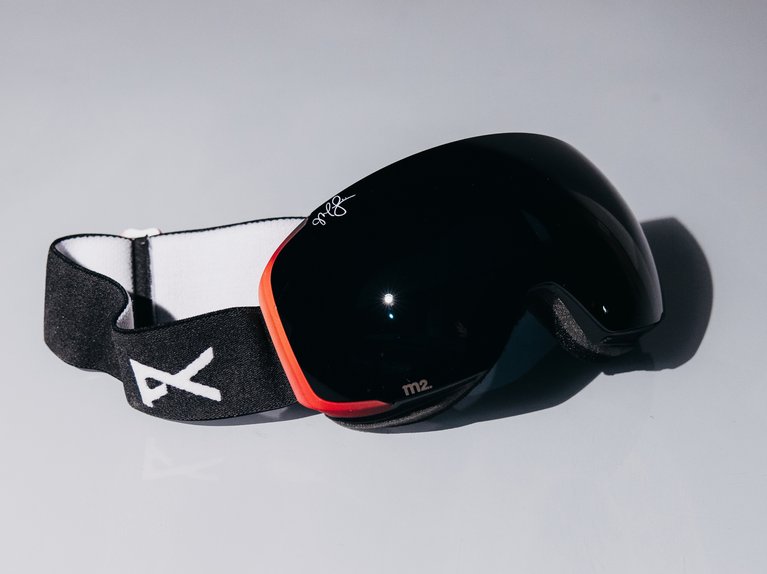
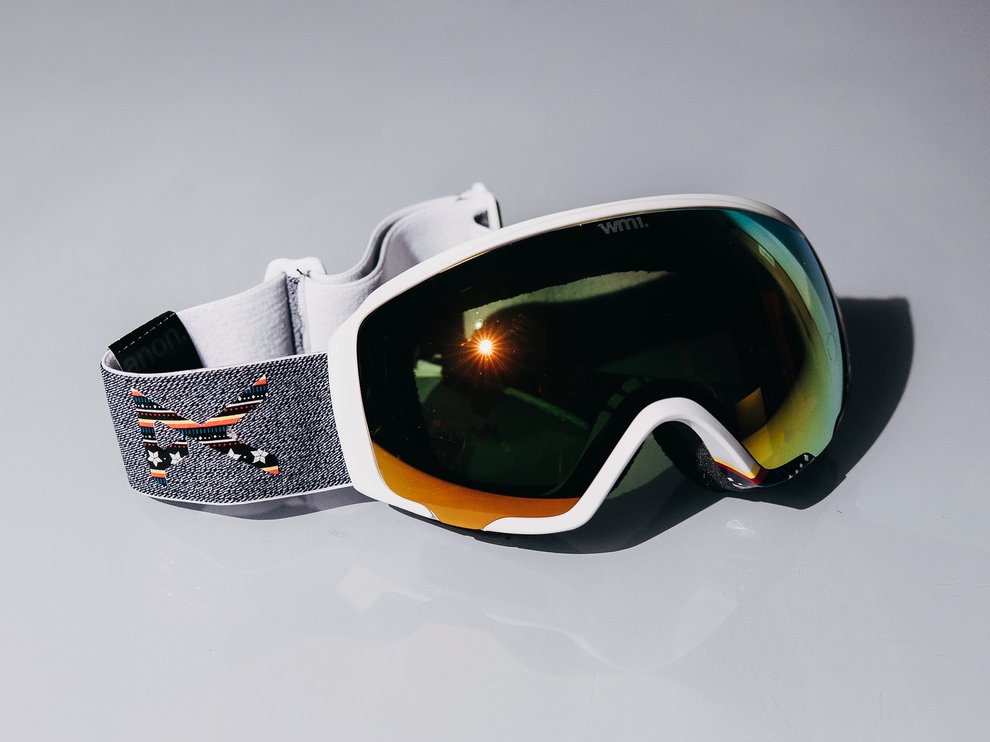
2017 saw Anon Goggles take another major leap forward with the introduction of Sonar lenses by ZEISS. It was a fast-track partnership designed to compete with Oakley's PRIZM and Smith's ChromaPop technologies, giving riders improved contrast and depth perception in low light. The ZEISS partnership was a major milestone that improved goggle lenses significantly, but bringing lens development in-house would eventually allow Anon to take greater control of the development process.
Then in 2018, the M4 Goggle launched, standing alone in its ability to accept both cylindrical and toric lenses for unmatched adaptability. Anon's most advanced and versatile Magna-Tech® goggle was equipped with a paneled MFI® face mask, and two magnetic lenses, letting riders adapt to changing conditions in seconds.
WaveCel® Impact Mitigation, Perceive® Lens Tech & New Goggles (2021-2025)
Another major milestone for Anon was the introduction of WaveCel® technology to its helmet line in 2021, a first for the industry. The moment was described internally as "the Magna-Tech of helmets," a reference to the ground-breaking nature of this helmet tech update.
WaveCel was developed by medical professionals with the goal of reducing the severity of head injuries by helping reduce rotational acceleration experienced in crashes. By flexing, crumpling, and gliding, the individual cells of the WaveCel lining in select Anon helmets can deform, like crumple zones in a car. Casual riders as well as those who go big all saw the value in helmets that could potentially reduce the severity of injuries.
In 2021, Anon also debuted Perceive® lens technology, its own in-house goggle lens tech. Perceive incorporated digital injection molding for unmatched optical precision, while simultaneously implementing new hydrophobic and oleophobic coatings to repel water and reduce smudging. The result was a lens with greater clarity, contrast, and durability, fully controlled within Anon's own supply chain.
In 2023, Anon introduced the M4S, a scaled version of the M4, to fit a wider range of faces, establishing a more inclusive standard for goggle sizing.
Just a year later, in 2024, the M5 became the first Magna-Tech® Goggle to deliver a flat toric lens design, for maximum field of view. It balanced sleek style with technical demands and the facial protection of MFI. M5 was also offered in a scaled M5S model.
M6 Goggles followed in 2026, rounding out the Magna-Tech® line with an expanded field of view, classic cylindrical lens shape, and the facial protection of MFI®. Available in a scaled version, M6 represents the latest evolution of Anon's goggle technology.
The Next Disruption
What does the future hold for Anon? After twenty-five years of rethinking how skiers and riders see and protect themselves, the question feels more relevant than ever. Modern goggles like the M4, M5, and M6 have refined Anon's field of view, and the 2026 lineup of helmets has never looked better, but the team is already looking farther into the future.
Anon Merchandiser Cory Crowder may have said it best: "The next disruption" will focus on redefining the connection between rider and equipment; improving magnetic systems, self-adjusting lenses, and helmet-goggle integration to entirely new levels of performance.
Anon's story has never been about resting on past innovations. It's a continuous drive to improve the equipment that protects, connects, and defines every descent: goggles, helmets, and face masks. The mission remains clear. Keep innovating, keep progressing, and keep building the tools that help athletes perform their best.