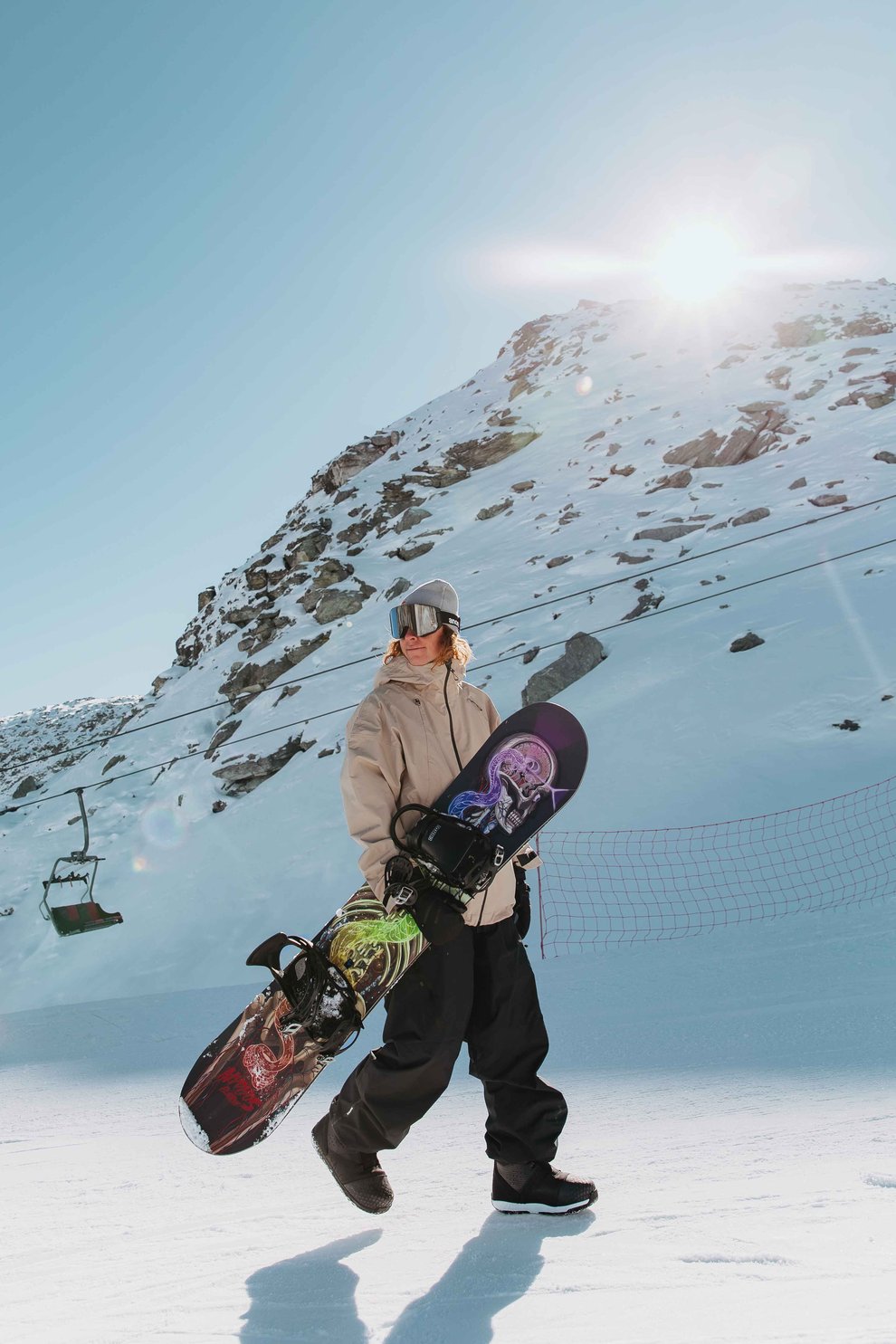
Together with snowboard retailer Blue Tomato, street artist Nychos designs a new snowboard for Burton
From graffiti and mural work to designing a snowboard for Burton, here’s the mind behind Kundalini Rising.
Nychos – the Austrian street artist behind the new snowboard collaboration with Blue Tomato and Burton – carries a global reputation for dissected cartoon characters and large-scale murals, making him a natural fit for designing Burton’s limited-edition board, Kundalini Rising.
Growing up in Austria, his childhood was shaped by a heavy hunting culture, the lingering shadow of the Cold War, and cartoon VHS tapes watched on repeat. Later, life took him to LA. From being bitten by wild boars in the Austrian woods to rewinding The Little Mermaid over and over, partly to figure out the anatomy of a mermaid, Nychos’s story is as raw and layered as his work – and this interview digs deep into the mind of the artist.
Nychos Childhood: The Origin of the Dissection Mind
Growing up in eastern Austria in the 80s, surrounded by the lingering tension of the Cold War, a heavy hunting culture, and the slow leak of Disney movies and cartoons, Nychos’s fascination with dissection, rawness, and comics starts to make a lot of sense. This is just the tip of the iceberg.
His signature “dissection” style might look surreal, but its roots are real. Coming from a family of hunters shapes you – both physically and mentally. “My dad took me on my first hunting trip when I was three,” he recalls. “I don’t remember much from it, but I do remember he brought home a deer. He shot the deer and opened it up. I remember there was snow. And as soon as he cut it open, there was so much blood. And then he pulled out all the organs.” A memory that would stay with Nychos forever.
Even at just three years old, Nychos's brain didn’t clock this process as death, “I asked my dad, ‘What is all of this?’ And he started explaining, pointing with the knife, this is the digestive system, large intestine, small intestine, the liver…” For Nychos, it was about wanting to understand the process of life – a theme that would define his work.
Like others who grew up around a strong hunting culture, Nychos, too, was no stranger to skulls and stuffed dead animals hanging on the walls. But his grandfather’s home turned it up a notch. “His house was filled with all kinds of crazy shit from the 50s. Instead of watching TV, I’d stare at bone structures like, wow, that’s crazy.” That mix of curiosity and exposure would become the backbone of his art. “People might call it childhood trauma,” he says, “but I don’t really see it that way.”
Childhood trauma or not, it was the beginning of an artistic mind built to dig deeper.
Teenage Years: Graffiti Becomes the Path
At only 12 years old, Nychos already knew his calling: art. As he grew, pens were replaced by cans, and graffiti took over. “That was the first time I felt a lot of energy going into something where I could explore as quickly as my mind goes.” His parents saw his potential, and by 14, he was attending art and graphic design school in Graz, Austria.
One night, after spending 200 shillings on a bottle of Eristoff vodka with his friends, something shifted. “I was like, this is fucking stupid. I have a plan. I know what’s going on. And for those 200 shillings, I could’ve bought four spray cans.”
There and then, he made the call to dive fully into graffiti. “You know what you want to do, but you don’t know where it takes you or what unfolds. Back then, when you told people you wanted to be a famous graffiti artist, especially in Austria, everyone was like, ‘Alright, sounds stupid, but go ahead.’”
Around the same time, Nychos started obsessing over anatomy from school skeleton models. That interest, mixed with his sense of humour, was what brought the dissected cartoon characters to life. “I built my whole artistic idea on humour. It’s this balance between this intense story about anatomy, death, and life — and then, oh, we can also laugh about it.”
Bringing anatomy into cartoon bodies became the breakthrough. “People recognised my work internationally, but that phase was a physical exploration for 13 years before it finally became something deeper.”
Nychos Between Vienna & LA: Two Cities, One Artist
With an interest in sketching from a young age, his signature style is rooted in childhood but fed by the two cities he now splits his time between: Vienna and Los Angeles. Sitting in his art bunker in LA, Nychos reflects on how different environments have shaped him.
“When I left Vienna 10 years ago, I was kind of over it. Things were going too slow, and I felt like I’d done everything I could. I had Rabbit Eye Movement, my studio and gallery, and I poured years into putting on shows, supporting other artists, and building a scene. But the appreciation never really grew past a certain point.”
Street art felt stagnant. Openings and shows often revolved more around free booze than the art itself – disheartening for an artist who had so much more to give. Realising that wasn’t the path for him, he packed up and moved to San Francisco in 2013 for a fresh start. “In a year, I painted so many murals in San Francisco that people thought I’d been local forever.”
Two years later, he moved south. “LA was very welcoming, and the energy was just different.” Since then, he’s built a company operating in both LA and Vienna, with a team of up to 10 people – a milestone anyone should be proud of. “We built the business and web shops across Austria and the US. My people here worked with my people in Vienna, and it became this fun entity. Every time I go back to Vienna, it’s madness. Then I come here and feel… peace. Which is funny, because LA is nuts – but somehow this is where I find peace.”
Nychos’ Artistic Evolution: From Anatomy to Energy
Life pushes all of us through different transformations, and Nychos knows that better than most. His art evolved because he did — through cities, through sickness, through whatever life threw at him. But then, he got seriously ill.
He realised pretty quickly that what he was dealing with wasn’t just physical. “I felt extremely lost. I was at a point I thought I was going to die,” he says. “But then, in being so extremely lost, I found a path.”
That path meant digging deeper: into himself, into the things blocking him from healing, into whatever he’d spent years avoiding. “Life is beautiful. And you kind of lose the fear of death. And I feel like everything I saw as a kid prepared me for that. At some point, you look back and think, huh… this is what it was doing to me.”
He kept going, “The deeper you go, there is no bottom. You realise you can do this forever. And then it doesn’t really matter – only what matters to you matters. That’s when you start finding your truth. The more you open that Pandora’s box, the more things just burst out of you, and you start aligning with who you truly are.”
His framework shifted from physical anatomy to something more internal. “I finally reached a place where I’m past all those stuck, traumatic experiences through many, many lifetimes. It’s beyond physical anatomy now.”
The transformation didn’t just change his perspective – it changed how he creates. “I’m sure there are a lot of snowboarders and skaters who are interested in art. What I learned is to use my visions as the source. Back then, I didn’t know that’s what it was – now I do. The message comes through me, from somewhere higher, and it manifests into the 3D. That’s where it transforms me, and where the audience transforms with me.”
His artistic evolution became exactly that: moving from slicing bodies apart to putting pieces of the unconscious back together.
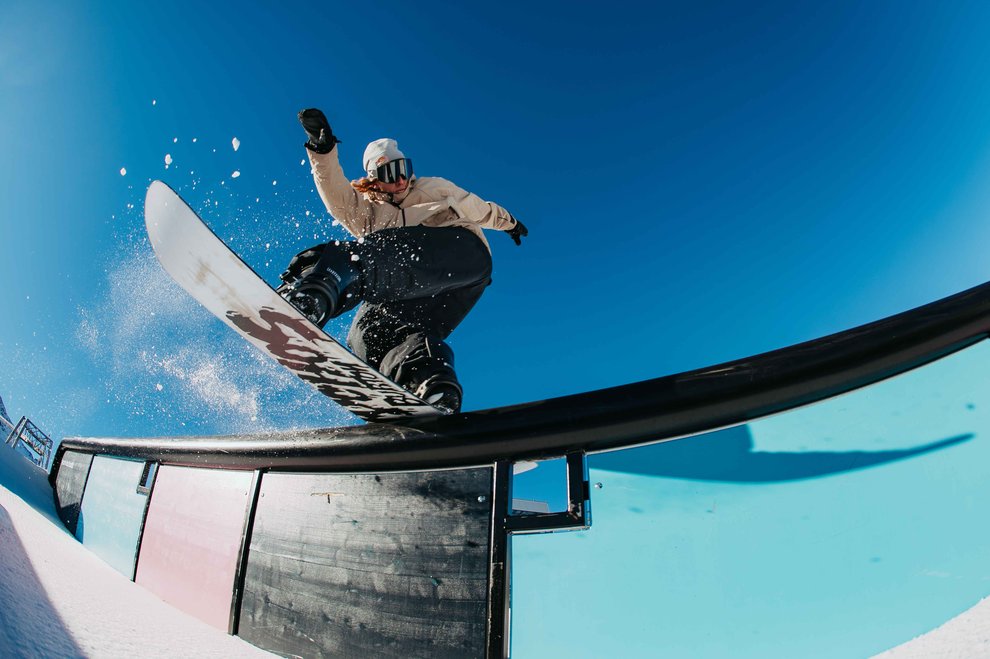
Kundalini Rising x Blue Tomato: The Snowboard
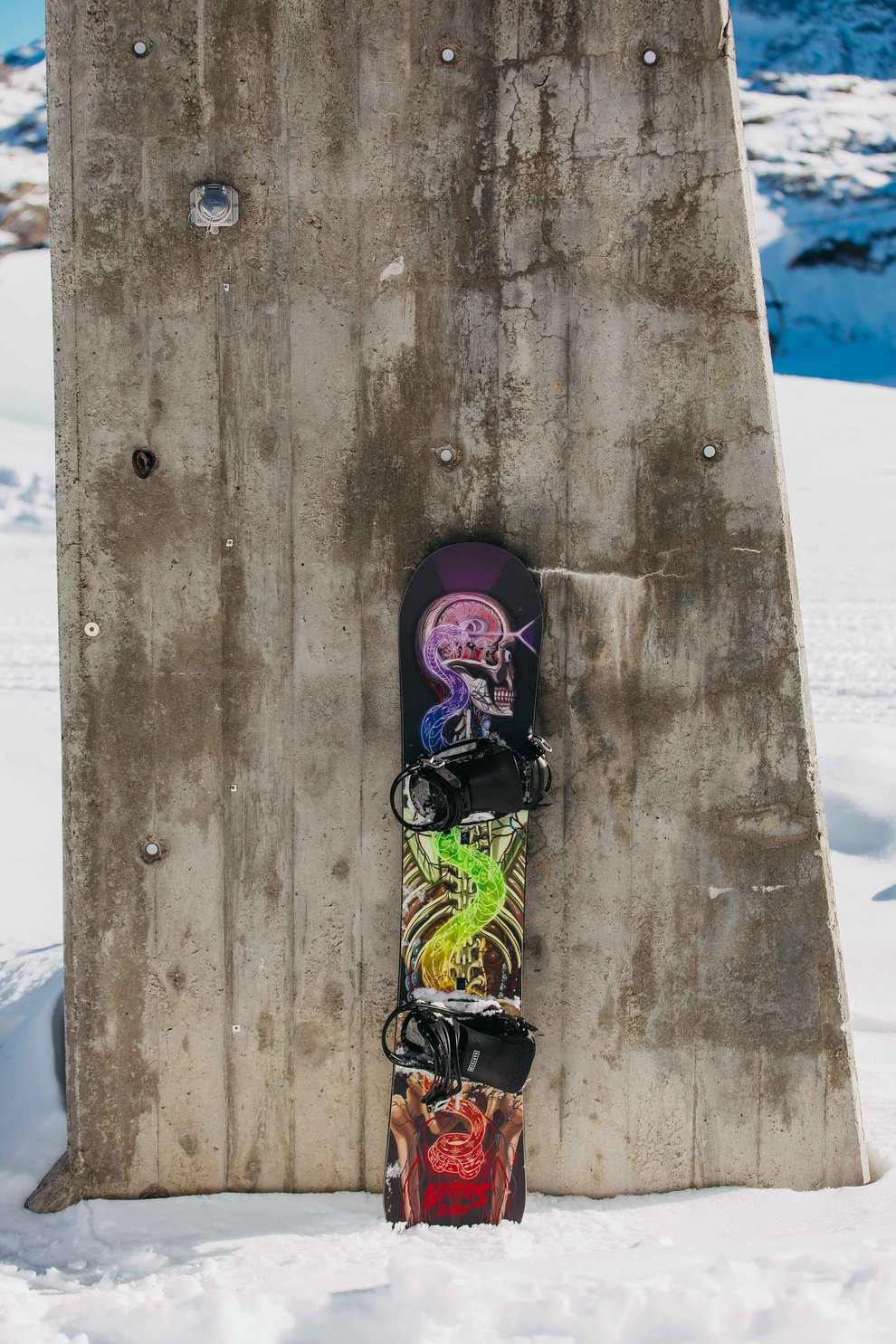
After years of painting, evolving, and moving through his own transformations, meditation has become one of the biggest fuels behind Nychos’ creativity. And that’s exactly where Kundalini Rising comes in — Burton’s new limited-edition board featuring his artwork launched together with Blue Tomato.
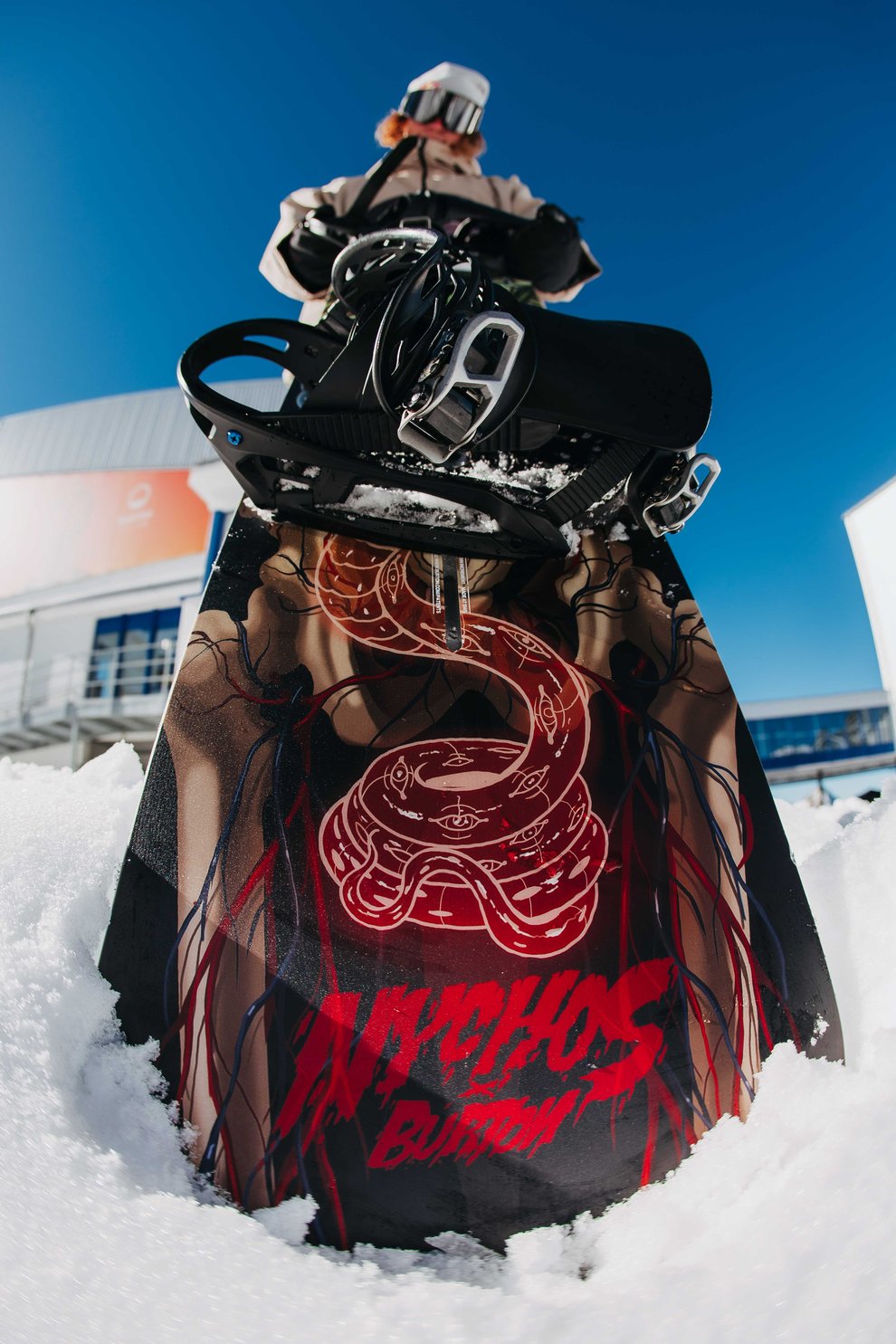
So what does Kundalini Rising actually represent? “It’s where people can really connect. This is more than just an anatomical view,” he explains. “This board symbolises everything I’ve been doing the last decade: the anatomy, the flow of energy, and the rise of the kundalini. There’s this rainbow snake crawling up, because there is no spiritual awakening without the serpent.”
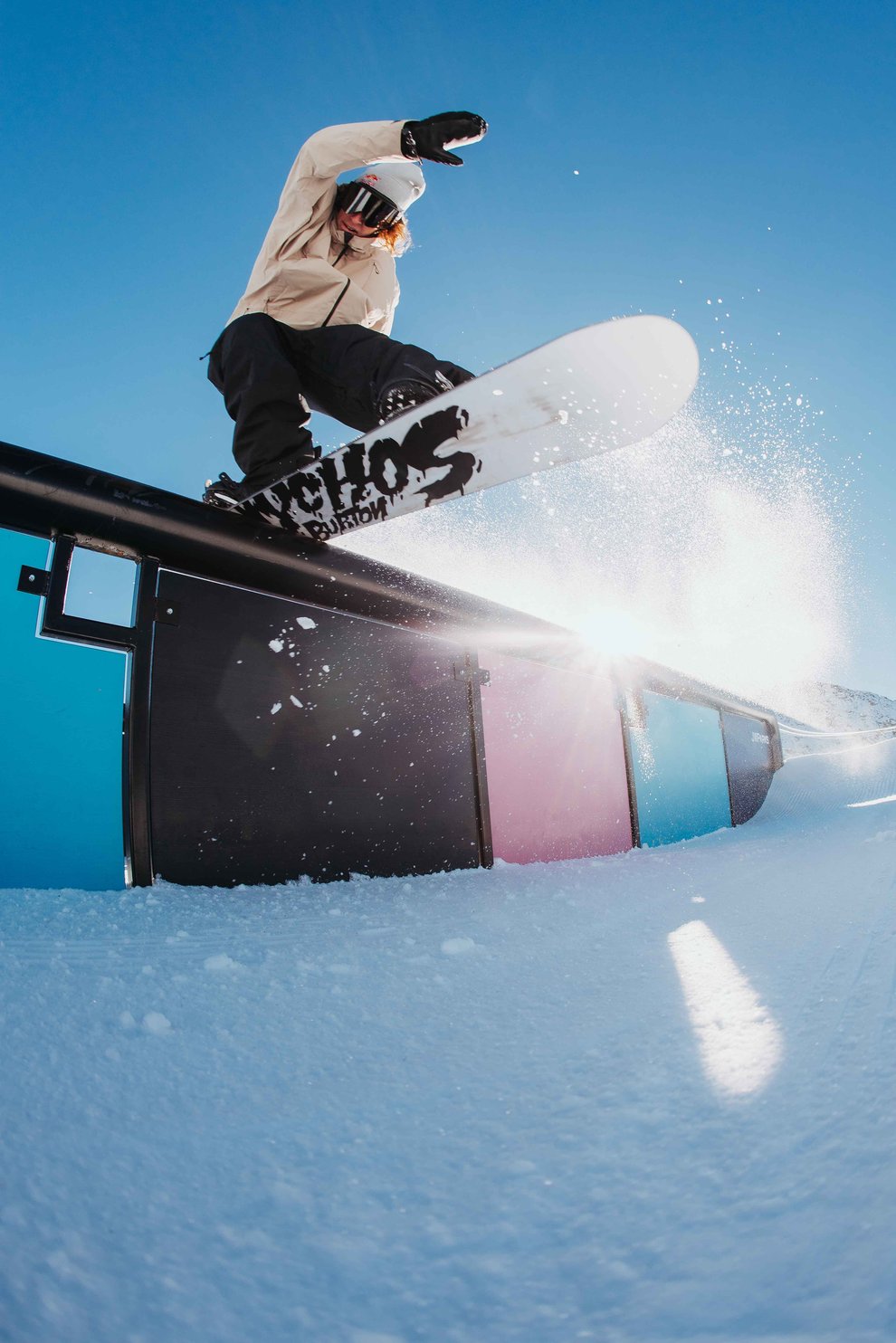
For him, the design came intuitively, “I’ve always wanted to design skateboards and snowboards. I’ve been into that culture since I was twelve.”
For Nychos, it was important that the design reflected not only what he’s always stood for, but also where he is now. “The serpent has been present in my life for the last ten years, especially since I started meditating. As this energy rises within me, it made sense: the spine, the body along the board, the snake passing through the chakras toward a higher sense of self and the connection to the divine. It was obvious where this was going.”
His transition from dissecting bodies to exploring energy is built into the piece. “Art is always a mirror of what’s going on inside if you’re truly connected to yourself. You pass through darkness to find the light, the most classic spiritual teaching. The dissection stuff was still tied to pain. Now the work is about the deeper layers, the painful part of the spirit or soul. It’s been rough years, but also magical.”
Kundalini Rising is a symbol of progress and a representation of how important it is to let yourself dig deep within, to listen to your soul, and let the spark from within shine through. “I hope the artwork dares the rider to ride through their emotions as they ride on the snow. Art hits people on the subconscious level; you don’t need to understand chakras to feel something shift.”
After a long journey, Nychos thinks back on what his teenage self would say if he could see himself now, “He’d definitely go, ‘Fuck yes.’ As a kid, you make a list of all the awesome things you want to do, and some things happen, some things resist, and you don’t understand it’s because it’s not time yet. This? This is something I probably wanted twenty years ago. I’d give that kid a high five. We went through hell, but we did it.”
In the end, Kundalini Rising is about ascent – the slow climb from whatever holds you down to whatever waits above.